
African SMEs do not become digitally mature by buying every tool available. They mature when technology helps them deliver work reliably: stock is visible, commitments are tracked, reports are trusted, backups exist, staff know what to do, and leaders can see problems early enough to act.
This article gives leaders a six-level ladder for improving delivery, data, control, staff adoption and decision visibility when technology is utilized for value addition.
The delivery meeting begins with a familiar sentence: “We are almost done.”
Then someone asks a simple follow-up question: “Where is the latest information?”
That is when the room starts to shift.
One person has the stock notebook.
Another has the supplier messages.
Finance has a different total.
The project lead has a WhatsApp thread with the client.
The owner remembers approving something, but nobody can quickly show when, why, or what changed after that approval.
Nothing about the situation looks dramatic. The team is working hard. Customers are still being served. The business is still moving. But delivery depends on memory, personal effort, and scattered records.

This is where many African SMEs find themselves. They are not “anti-technology.” They are trying to serve customers in environments where margins are tight, internet reliability varies, staff skills differ, and every new system feels like another cost to carry. The result is a business that may use phones, mobile money, email, and social media but still cannot see its work clearly.
Digital maturity is not measured by how many apps or software a business uses. It is measured by whether work can move reliably, information can be trusted, risks are controlled, staff can use the tools, and leaders can make decisions without chasing people for missing facts.
For African SMEs, the right question is not
“Are we digital?” It is “What is the next level of discipline our delivery
model can realistically sustain?”
Why this topic focuses on African SMEs
The phrase “African SMEs” matters because the digital maturity journey is not the same everywhere.
A small business in Lusaka, Cape Town, Nairobi, Windhoek, Cairo, Addis Ababa, Lagos, Accra, or Kigali may not be deciding between five enterprise platforms.

It may be asking more basic but more important questions:
Can we track stock without guessing?
Can we invoice consistently?
Can we recover our information if a computer is stolen?
Can staff use the system while clients are waiting?
Can we prove what happened in a project without searching through many phones?
That is a different problem from the polished digital transformation stories often written for large corporations.
Why Digital Maturity Matters to Project Delivery
Every SME delivers projects, even when it does not call them projects. A customer order is a small project. A stock replenishment is a project. A school term launch is a project. A grant activity, supplier delivery, site visit, marketing campaign, payroll cycle or new branch setup is a project.
Project delivery needs scope, ownership, timing, cost awareness, risk control, and feedback. Digital maturity strengthens those basics. It helps the business know what is happening, who is responsible, what changed, what is delayed, where money is going, and what to improve next.
Africa’s digital opportunity is real, but uneven. ITU’s 2024 Facts and Figures estimates that the average share of people using the internet in Africa was 38%, compared to 68% recorded globally. GSMA’s 2025 Mobile Economy Africa report also places mobile internet penetration across Africa at 28%.
These figures do not mean African SMEs cannot digitize. They mean digital maturity must account for affordability, skills, access, trust, and practical use.[1][2]
The IFC and World Bank research on African businesses also links more advanced and intensive digital use with higher productivity, while noting that connectivity, software, and equipment costs remain real barriers for many firms.[3] The point is not that every SME should become fully digital overnight.
The point is that the next step should be using the right tools deeply enough to improve how the business works.
PMI’s 2025 Pulse of the Profession report makes a related project-management point: project success improves when professionals understand business context, value, stakeholders, and outcomes, not only tasks and schedules.[4] Digital maturity works the same way. A tool is useful when it helps the business deliver value, not when it merely looks modern.
The six levels of digital maturity
A ladder is useful because it prevents two common mistakes: pretending a business is more mature than it is, or trying to jump into tools the team cannot yet use well.
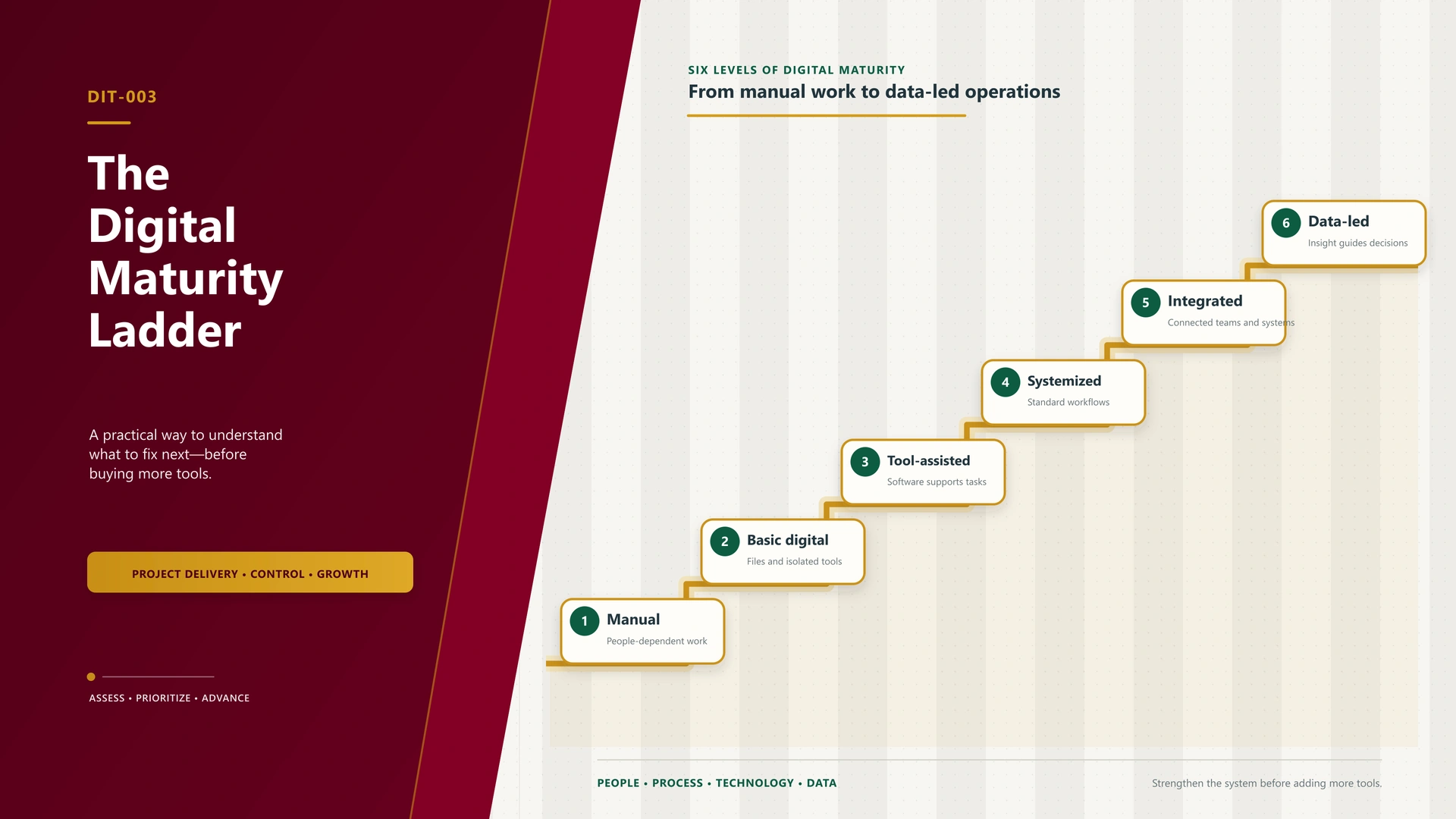
Figure 1: The six-level AES Digital Maturity Ladder for African SMEs.
The goal is not to shame a business for being on a lower rung. The goal is to identify the next honest rung.
Level 1: Paper-dependent and Person-led
What you notice: Records live in notebooks, phones, paper files, memory, and scattered receipts. Reports are created only when someone urgently asks for them.
What is happening beneath the surface: The business has no dependable operating record. Work moves because committed people chase it.
Practical consequence: Projects depend on individuals, not systems. If a key person is absent, delivery slows, or decisions become guesswork.
Ask yourself: What important work would slow down if one key person was unavailable for two weeks?
Level 2: Basic digital contact
What you notice: The business uses phones, mobile money screenshots, WhatsApp groups, email, basic spreadsheets, or a simple POS, but core records are still informal.
What is happening beneath the surface: Digital tools are helping individuals, but they have not become an operating system for the business.
Practical consequence: Information is faster to send but still difficult to control, verify, and report.
Ask yourself: Which digital records are official, and which ones are just convenient copies?
Level 3: Tool-assisted but Inconsistent
What you notice: A system has been introduced, but staff still keep parallel notebooks, skip entries, delay updates, or return to old habits when work gets busy.
What is happening beneath the surface: The organization bought or introduced a tool before people, processes, and policy were ready.
Practical consequence: Management blames adoption, staff blames complexity, and reports cannot be trusted.
Ask yourself: Are staff resisting the system, or are they unsure how it helps their daily work?
Level 4: Systemized but Fragmented
What you notice: Different parts of the business now use systems: stock, sales, accounting, payroll, HR, customer contact, or project tracking. But they do not connect smoothly.
What is happening beneath the surface: The business has moved beyond survival, but departments still operate from separate truths.
Practical consequence: Managers spend time reconciling information instead of using it.
Ask yourself: Can one customer order, project, or expense be followed end to end without manually rebuilding the story?
Level 5: Integrated and Governed
What you notice: Core processes have owners. Access rights are controlled. Backups are scheduled and tested. Reports have agreed definitions. Staff know which tools to use and when.
What is happening beneath the surface: Technology is now supported by governance.
Practical consequence: Leaders can see risk earlier, act faster, and hold teams accountable more fairly.
Ask yourself: Do we have rules, owners, and review routines that protect the systems we depend on?
Level 6: Data-led and Scalable
What you notice: Leaders use reliable information to plan stock, projects, staffing, cash needs, customer follow-up, and improvement priorities.
What is happening beneath the surface: The organization has moved from recording the past to managing the future.
Practical consequence: Growth becomes less dependent on one person’s memory and more supported by visible data and disciplined delivery.
Ask yourself: Are our decisions still based mainly on instinct, or do our records help us see what is coming?
A real African SME barrier: fear disguised as “not ready”
In one anonymous retail SME observation shared for this article, the visible issues were straightforward: manual stock tracking, no backups, weak reporting, no expense tracker, no finance system, no HR system, no online presence, and no clear IT policy.
On paper, the solution seemed obvious: introduce basic digital systems, start with stock and finance records, create simple backup routines, and train staff on the tools they were expected to use.

But adoption was difficult. Staff avoided the systems, especially when clients were in a hurry. Some workers did not feel confident using spreadsheets. They described technology as tedious and time-wasting. The business also feared that becoming more digital would make it “look too big,” attract tax attention, increase compliance demands, and consume the little profit available.
That observation is important because it shows the problem behind the problem.
The issue was not only readiness. It was fear.
Fear of tools people did not understand.
Fear that documentation would expose gaps.
Fear that structure would bring costs before benefits.
Fear that serving the client quickly and recording the transaction properly could not happen at the same time.
Many African SMEs do not reject digital maturity because they dislike progress. They hesitate because the change feels risky, expensive, exposing, or impractical on a busy workday.
Four Maturity Traps That Keep SMEs Stuck on Lower Rungs
These traps are common because they are reasonable at first. They only become dangerous when they are allowed to define how the business operates.
Trap | What you notice | What is happening beneath the surface | Delivery consequence | Question to ask |
|---|---|---|---|---|
The “too busy to record” trap | Staff serve clients first and update records later, if at all. | The business treats speed and control as opposites. | Stock, sales, expenses, and project status become unreliable. | What record must be captured at the moment work happens? |
The “profit will disappear” trap | Leaders delay tools because every cost feels risky. | Digital investment is viewed as an expense, not control or delivery capacity. | The business keeps paying hidden costs through errors, rework, and lost visibility. | What small digital step would protect profit before it adds cost? |
The “people will learn somehow” trap | Tools are introduced without proper user confidence. | Adoption is assumed instead of managed. | Staff return to old habits under pressure. | What task-based training is needed before go-live? |
The “no policy, no problem” trap | Passwords, devices, backups, and access rights are handled informally. | Risk is invisible until something breaks, disappears, or is misused. | Recovery, accountability, and continuity become weak. | What simple IT rules must exist even in a small business? |
Extra Informal Traps
The Clipboard Comfort Zone. The business trusts paper because paper feels simple. The hidden cost is that paper rarely gives leaders fast visibility across stock, cash, customers, projects, and staff activity.
The WhatsApp Approval Loop. Work moves through messages because it is quick. The hidden cost is that decisions become hard to trace, hand over, audit, or learn from.
The One-Person Spreadsheet. One person can produce the report, so the business assumes the process is working. The hidden cost is dependency. If that person leaves, is absent, or makes an error, the system collapses.
The System Nobody Owns. A tool is installed, but no one owns data quality, user discipline, access rights, or support. The hidden cost is poor adoption disguised as a software problem.
The Report Rebuild. Every month, the same report is recreated from scratch using screenshots, notebooks, and separate files. The hidden cost is time lost to reconstruction instead of decision-making.
The Fear of Visibility. Better records can feel threatening because they reveal tax, compliance, stock loss, staff performance, or cash-flow realities. The hidden cost is that fear keeps the business informal even when complexity requires stronger control.
Why Leaders Often Do Not Notice the Maturity Gap
Digital immaturity rarely announces itself in one dramatic event. It hides inside workarounds.
Leaders usually miss the gap for understandable reasons.
First, the business may still be earning. Revenue can hide weak systems for a while. If customers keep buying, it is easy to postpone the uncomfortable work of documentation, training, and controls.
Second, people adapt. Staff create shortcuts, use personal phones, remember supplier details, stay late and rescue urgent orders. From the outside, it looks like commitment. Underneath, the organization borrows from people’s energy to cover weak systems.
Third, every department sees only part of the problem. Sales sees customer pressure. Operations sees stock confusion. Finance sees missing records. HR sees inconsistent attendance or payroll information. The owner sees it all, but often too late and with too little reliable data.
Fourth, technology may feel like a cost before it feels like a control. For an SME managing thin margins, a system, subscription, backup plan, website, or staff training session can feel like money leaving the business. That fear is real. But so is the cost of not knowing what is happening.
The point isn't that SMEs are careless. Many are doing impressive work with limited resources. The point is that growth eventually asks for a stronger operating record than memory can provide.

Project management thinking helps here. PMI’s 2025 Pulse of the Profession report emphasizes that project success is not only meeting deadlines and budgets; it is delivering value that is worth the effort and expense. For African SMEs, digital maturity should be judged the same way.
The question is not, “Do we have a system?” The question is, “Does this system help us deliver value more reliably?” [5]
A practical digital maturity diagnostic
This is not a formal audit. It is a quick self-check for owners, managers, finance teams, operations leads and project teams.
Can you see the status of important orders, projects or customer commitments without calling several people?
Are stock, sales, expenses, customer records, HR records and project information stored in agreed official places?
If a laptop, phone or notebook is lost today, can the business recover its critical information?
Do staff know the minimum information they must capture even when customers are waiting?
When reports are needed, are they produced from trusted records or reconstructed manually?
Are passwords, access rights, devices, and staff exits managed through simple rules?
Do people avoid systems because they lack skills, fear exposure, or believe the tool slows down service?
Can the business explain how digital tools improve delivery, control, customer trust, or decision-making?
Does the business have an online presence that helps customers verify, contact, or understand the business?
When people avoid a system, do leaders investigate skill, workload, fear, and process fit before blaming attitude?
Several weak answers may indicate a structural issue rather than an isolated one. The business may not need a large digital transformation project immediately. It may need to clarify the workflow, train people, clean the data, assign ownership, or introduce one basic control to help climb one practical rung in one important process.
The Leadership Insight: digital maturity is delivery discipline
Digital maturity is not a status symbol. It is the discipline of making work visible, repeatable, protected, and useful for decisions.
A mature business is not the one with the most advanced platform. It is the one where work can move without constant chasing, information can be trusted, people can use the tools, and leaders can see enough to act before problems become emergencies.
That means the leader’s job is not to force the organization from Level 1 to Level 6 in one leap. The leader’s job is to identify the current rung, choose the next useful improvement, and make it stick.
For a small retailer, the next rung may be a reliable stock and expense tracker with weekly backup.
For a supplier, it may be a project delivery tracker with proper document storage.
For a school, it may be student records, parent communication, and fee tracking.
For a professional-services firm, it may be a project dashboard, client files, and a clear handover routine.
The best digital improvements are boring before they are impressive. They make daily work easier to repeat, supervise, report, and improve.
Leaders therefore need to stop asking only, “What technology should we buy?”
The better question is: “Which part of our delivery is currently too dependent on memory, personal effort, or scattered information?”
What successful improvement actually requires
A practical African SME digital maturity journey usually requires seven things.

Choose a delivery problem before choosing a tool. Start with stock accuracy, invoicing, project tracking, expense control, customer follow-up, HR records, or reporting. A tool without a clear delivery problem becomes another burden.
Define the minimum useful record. SMEs do not need to document everything at once. They need to decide what must be captured for work to continue, reports to be trusted, and decisions to improve.
Make the process easy during pressure. If the system only works when the shop is quiet, or the office is calm, adoption will fail. Design for the busy moment.
Train people on real tasks, not abstract features. A cashier, project officer, stock handler, or admin assistant needs to practice the exact work they will perform, using realistic examples.
Put basic governance in place. At minimum, define owners, passwords, backups, access rights, device rules, update routines, and what happens when someone leaves. Governance is not bureaucracy; it is continuity.
- Make visibility safe and useful. Some resistance comes from fear. Explain that the purpose of better records is not to punish people, but to reduce confusion, protect stock, improve decisions, and prepare the business for healthier compliance and growth.
Measure adoption and delivery improvement. Track whether the new habit reduces missing records, reporting delays, repeated calls, stock confusion, service errors, or project uncertainty.
What to Avoid
Do not buy a large system to compensate for unclear work. Software cannot fix ownership that has never been defined. If the workflow is unclear, the system will inherit the confusion.
Do not treat staff resistance as laziness. Sometimes resistance is fear, low confidence, or a reasonable concern that the tool will slow service. Ensure that people understand the purpose, have the skills, and can use the tool under real customer pressure.
Do not digitize everything at once. Overloading a small team can make digital maturity feel like punishment.
Do not treat apps like WhatsApp as a full management system. They are useful for communication, but weak for records, accountability, handovers, and reporting.
Do not make formal records a source of panic. Better visibility may expose obligations and gaps, but that is a reason to seek proper business, tax, or compliance advice, not a reason to remain blind.
Do not ignore the compliance fear. Explain why records, tax discipline, and operational visibility protect the business instead of pretending the fear does not exist.
Do not ignore backups because the business is small. Device loss, damage, theft, or accidental deletion can stop work quickly.
Do not try to digitize everything at once. One well-adopted improvement is better than five abandoned tools.
Do not celebrate installation as transformation. The tool matters only when people can use it reliably, and the business can see better results.
A realistic Action Pathway: climb one useful rung
Start with one process where poor visibility affects delivery. For many SMEs, this may be stock, invoicing, orders, expenses, fieldwork, projects, HR records, or customer follow-up.
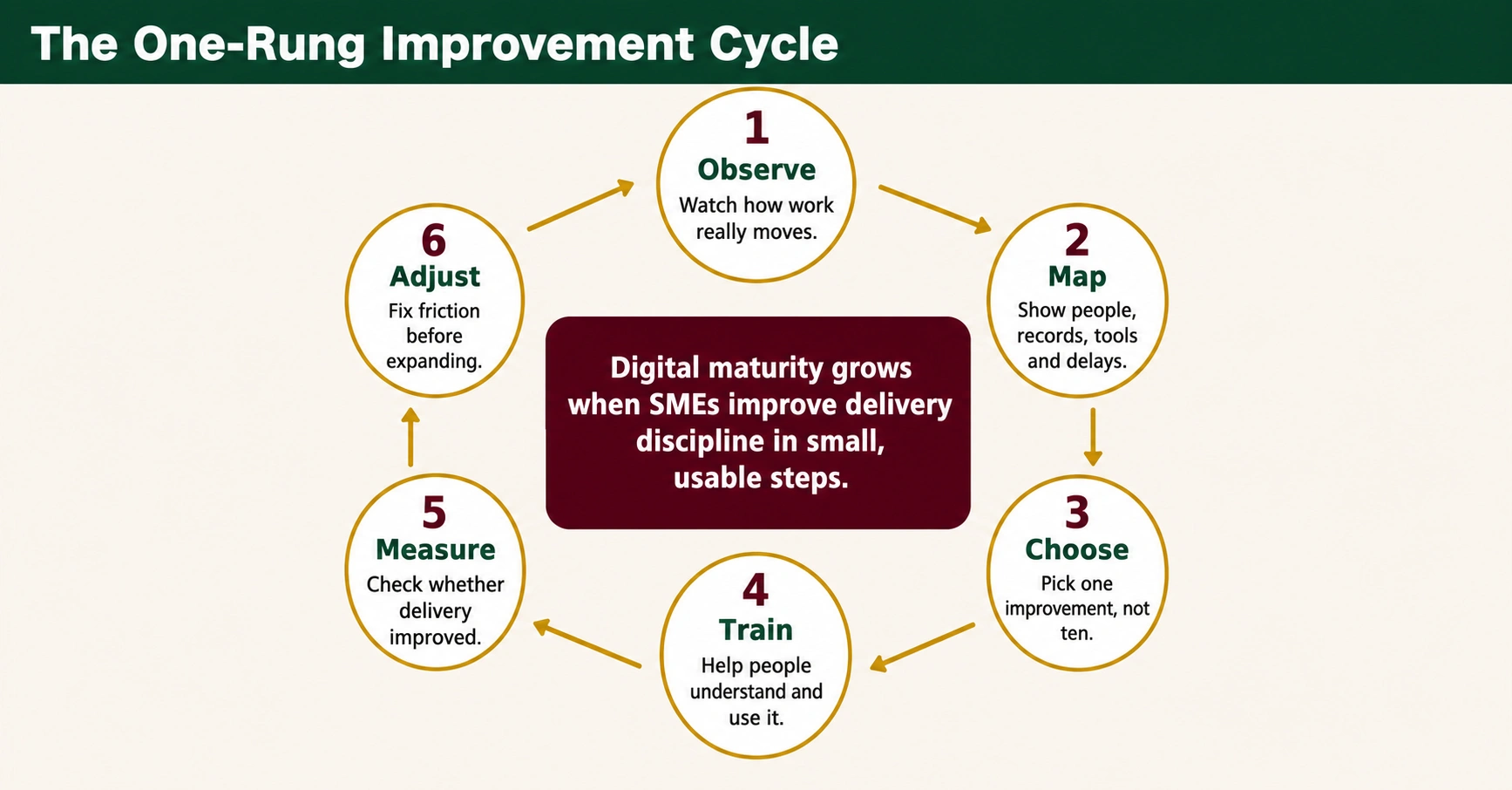
Figure 2: A one-rung improvement cycle keeps digital maturity realistic for SMEs.
Choose one recurring delivery problem: stock errors, late customer follow-ups, missing expenses, weak project visibility, slow reports, or staff attendance confusion
Observe what actually happens during a normal busy day.
Map the people, decisions, tools, records, handovers, and delays involved.
Identify the current maturity level for that process.
Define the next rung. Do not jump from paper records to a complex integrated system if basic discipline is missing.
Choose the smallest tool or workflow that supports that next rung.
Write simple rules for ownership, backups, access, and record quality.
Train the people who will use the process, using real examples from their work.
Run the improvement for four weeks, then review adoption, reporting quality, and delivery impact before expanding.
Measure whether delivery has improved before expanding to another process.
This is how maturity becomes manageable. It does not assume unlimited budgets, perfect connectivity, advanced user skills, or large IT teams. The organization learns by improving one real process, then builds confidence for the next one.

The AES perspective
At AES, we would approach digital maturity as a business delivery issue before treating it as a software issue.
A practical review would examine how work moves, where information breaks, which records matter, who owns decisions, what risks exist, what staff can realistically use, and which digital step will improve delivery without overloading the business.
For an African SME, the correct starting point may be as simple as a stock tracker, a backup routine, an expense record, a basic website presence, a customer follow-up process, a finance tool, an HR record structure or a project dashboard. The starting point depends on the business model, risk exposure, current skills, growth stage and delivery pressure.
Use the AES Digital Maturity Assessment to identify where your organization sits on the ladder, which process is most exposed, and what practical next rung would improve delivery. For organizations needing a deeper review, AES can support a digital readiness review, process-tech fit assessment, roadmap design, tool selection, implementation planning and staff adoption support.
Share Article
Explore AES IT & Digital Transformation | Request an AES digital readiness review
Related Articles
- Digital Transformation Is Not a Software Purchase — It Is a Business Discipline (Digital & IT Insights)
- Why Many Digital Projects Fail Before Implementation Starts (Digital & IT Insights)
- The Hidden Tax of Manual Processes (In Business Today)
- What SMEs Should Digitize First: A Practical Decision Framework (Digital & IT Insights)
- Infrastructure Planning for SMEs That Want to Scale (Digital & IT Insights)
- The Digital Maturity Ladder: Where Most Zambian SMEs Actually Stand (In Business Today)