
Many young professionals and early founders have ambition, but ambition without direction can become scattered effort. This article explains how to turn big desire into a clearer path using a practical direction filter, diagnostic questions and a seven-day reset.
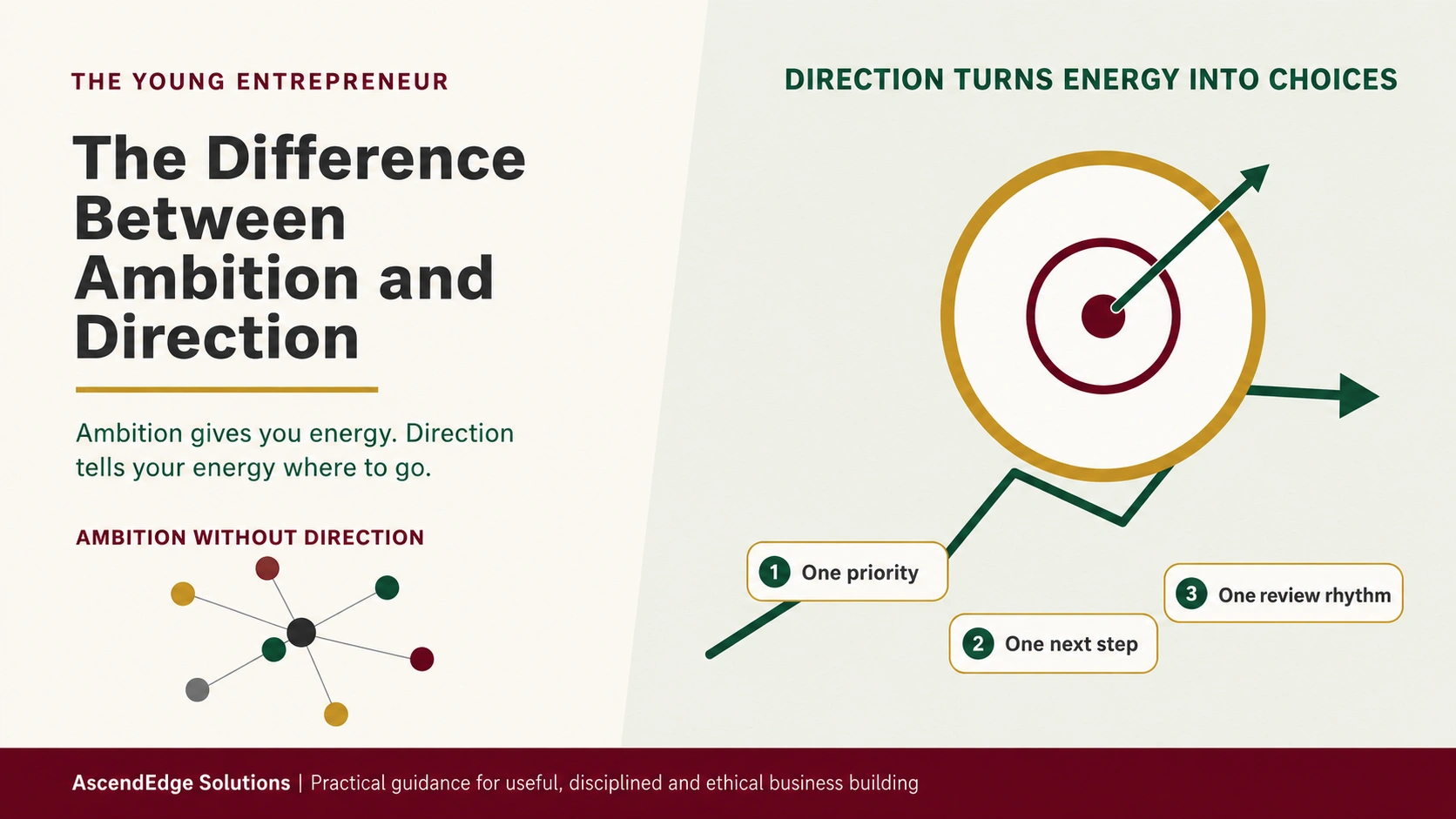
Figure 1. Illustrative editorial image: ambition becomes more useful when it is connected to a clear path, priority and review rhythm.
The Notebook Full of Futures
You may know this feeling.
Your notebook has business ideas, career plans, course names, bible verses, product sketches, motivational quotes and a few old goals you no longer mention because you are not sure whether you still believe in them.

One week, you are thinking about starting an online store. The next week, you are considering a professional certification. Then someone posts about investing in government bonds, and suddenly that looks like the better path. A friend opens a small business, and you feel left behind. A cousin gets a job, and you wonder whether entrepreneurship is distracting you. Then another opportunity appears, and your mind starts again.
Here is the thing;
You are not lazy.
You are not unserious.
In fact, the problem may be that you care so much about building a better life.
But ambition without direction can become exhausting. It gives you energy, but it does not always tell your energy where to go.
Ambition is desire. Direction is decision.
Ambition is the desire to become, build, improve, earn, contribute or rise beyond your current situation. It is valuable. A young person with no ambition may not push beyond comfort, learn new skills or notice opportunities.

Direction is different. Direction is the ability to decide what matters now, what does not fit this season, and what evidence will show that you are moving in the right path.
Ambition says, “I want to do something big.”
Direction asks, “What problem am I solving, who does it help, what can I test now, and what must I stop doing so this has a chance?”
That difference matters because many young professionals and founders do not fail because they lack dreams. They struggle because their dreams are not yet organized into choices.
Memorable insight
Direction is not the opposite of ambition. It is ambition with a map, a filter and a next responsible step.
The Problem behind the Problem
The visible problem looks like inconsistency.
You start and stop.
You plan without acting.
You act without reviewing.
You announce a new idea and then lose interest when the work becomes unclear.
Beneath the surface, the deeper issue is often decision overload. You have many possible paths, but no clear way to choose between them.
So every new opportunity feels urgent.
Every comparison feels personal.
Every delay feels like failure.

A student, graduate, freelancer or early founder may have limited capital, family and relationship pressure, school demands, job-search responsibilities and unstable connectivity. In that environment, direction is not a luxury. It protects your limited energy from being spent everywhere at once.
The Four Direction Drains
These patterns appear often when ambition is present but direction is weak. They are not character flaws. They are signals that your energy needs a clearer structure.

1. The Many-Doors Problem
What you notice: every opportunity looks possible, so choosing one feels like losing all the others.
What is happening underneath: you have not defined your decision criteria. Without criteria, every idea competes equally for your time.
Example: A young professional wants to start a cleaning service, learn data analytics, sell clothes online and apply for a better job in the same month. None of these paths is bad. The problem is trying to treat all of them as the main priority.
Consequence: effort spreads thin, progress becomes hard to measure, and the person starts believing they lack discipline when the real issue is unmade decisions.
Ask yourself: Which one path deserves a serious test in this season, and which ideas should wait?
2. The Borrowed-Dream Problem
What you notice: your goals change after watching other people succeed.
What is happening underneath: comparison is quietly choosing for you. You may be chasing an image of success rather than a direction that fits your skills, responsibilities, values and market reality.
Example: A graduate wants to launch a beauty brand because several people online appear to be doing well. But she has not spoken to customers, studied the supply chain, calculated the working capital, or asked whether she wants the daily work behind the brand.
Consequence: the business may begin as performance before it becomes a solution. When attention is slow, discouragement follows quickly.
Ask yourself: Would I still choose this path if nobody clapped for it online?
3. The Motion-Without-Map Problem
What you notice: you are always busy, but cannot explain what changed this month.
What is happening underneath: activity has replaced progress. Designing a logo, saving business videos, joining groups and rewriting plans can feel productive, but they may not produce evidence.
Example: A side hustler spends three weeks changing colors, names and captions, but has not spoken to five potential customers or offered one small test version of the service.
Consequence: the person feels tired without becoming clearer. The business looks active from a distance but remains untested underneath.
Ask yourself: What visible result should exist by the end of the next 30 days?
4. The Announcement-Pressure Problem
What you notice: you announce a big plan early, then feel embarrassed when the work slows down.
What is happening underneath: the announcement gave you a temporary sense of progress before the idea had enough structure to survive reality.
Example: A young founder posts that a new platform is launching soon, but the offer is not clear, no test users have been interviewed, and the operating plan is still vague.
Consequence: pressure replaces learning. Instead of testing quietly and improving honestly, the founder starts managing appearances.
Ask yourself: What private proof should I build before I make a public promise?
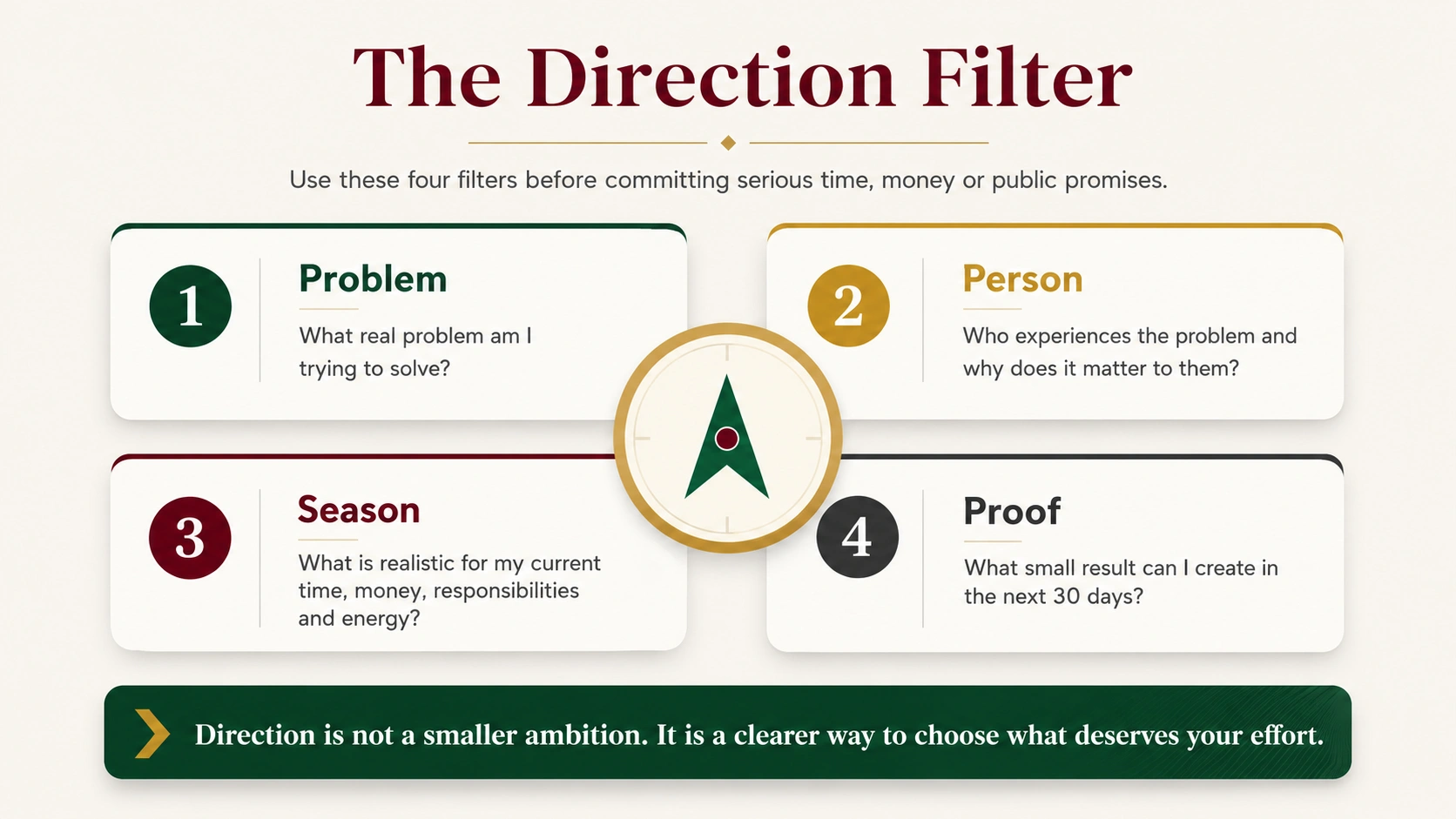
Figure 2. The Direction Filter helps young founders test whether a path fits the problem, person, season and proof required.
Why smart, ambitious people often miss it.
Ambition is easier to recognize than direction. It is visible in confidence, language, energy and big plans. Direction is quieter. It shows up in what you choose, what you postpone, what you refuse and what you review.

That is why capable people may not notice the gap early. Family and friends may praise big dreams more than careful testing. Social media may reward announcements more than patient execution. A busy schedule may make scattered effort feel respectable. Fear may make every option feel safer than one clear commitment.
There is also a personal reason: direction requires saying no. Not forever, but for now. That can be difficult when you are young, trying to prove yourself and afraid of missing out.
A clear direction does not mean your life is fixed. It means this season has a focus.
A practical diagnostic: is ambition ahead of direction?
Use these questions as a reflection tool, not as a formal assessment. Several “yes” responses may indicate that you need clearer direction before adding another goal.
Do I have several goals competing for the same time, money or attention?
Have I changed my main idea more than once without testing the previous one properly?
Can I explain the problem I am trying to solve without describing the product first?
Do I spend more time planning, posting or researching than speaking to real users, customers or mentors?
Am I choosing this path because it fits my season, or because someone else seems to be winning with it?
Can I name one measurable result I want to create in the next 30 days?
Do I have a review rhythm that helps me decide what to continue, stop or adjust?
The founder insight: direction is a filter, not a cage.
Some young people resist direction because they think it will make their dreams smaller. It does not have to. Direction does not say you can only do one meaningful thing forever. It says your current season needs a clear focus so your effort can produce learning.

A founder, student or young professional grows faster when decisions are filtered.
The filter asks: does this path solve a real problem, fit my current capacity, use or develop a relevant strength, and create evidence within a reasonable period?
Without that filter, ambition keeps collecting ideas. With it, ambition starts producing progress.
What good direction actually requires
Good direction is practical. It does not require a perfect life plan. It requires enough clarity to act responsibly now.
Choose a season, not a lifetime identity
You may not know exactly what you want to do for the next ten years. That is normal. Start by defining the next 30 to 90 days. A season is long enough to test seriousness and short enough to adjust without shame.
Connect ambition to a real problem
A direction becomes stronger when it is connected to a problem someone recognizes. “I want to be successful” is too broad. “I want to help small food vendors organize orders more reliably” gives your effort a clearer place to land.
Match the plan to your current resources
Direction must respect reality. A student with exams, limited capital and family responsibilities may need a smaller test. That is not failure. It is responsible design.
Define proof before momentum
Before you chase growth, define what would count as useful evidence. That may be five customer conversations, one paid test, a simple portfolio piece, a completed prototype or a clearer weekly routine.
Review before expanding
Do not add more goals before reviewing what the current one has taught you. Direction improves through reflection: what worked, what failed, what surprised you and what should change?
What to avoid
Do not confuse a big dream with a clear plan. Size is not the same as direction.
Do not copy someone else’s path without checking context, capability, timing and market need.
Do not make funding the first step when the idea has not been tested with real people.
Do not keep announcing new plans to regain motivation after old ones become difficult.
Do not turn reflection into endless overthinking. Direction should lead to action, not paralysis.
A seven-day direction reset
Use this reset when your ambition feels high but your effort feels scattered.
List all the ideas, goals and responsibilities currently competing for your attention.
Group them into three categories: urgent responsibilities, serious opportunities and distractions for this season.
Choose one opportunity to test for the next 30 days.
Write the problem, person, season and proof for that opportunity.
Identify one action you can complete in the next 48 hours.
Decide what you will pause so the chosen direction has room.
Set a review date before you expand, announce or invest further.
Practical Takeaways and Immediate Actions
Key takeaways
Ambition is valuable, but it becomes tiring when it is not organized into choices.
Direction is not a smaller dream; it is a clearer filter for deciding what deserves attention now.
Young founders often lose momentum because they pursue too many options without a test or review rhythm.
A practical direction should name the problem, the person served, the current season and the proof required.
Immediate action steps
Write down every goal currently pulling your attention.
Choose one opportunity to test for the next 30 days.
Define the person, problem and proof for that opportunity.
Identify one action you can complete within 48 hours.
Pause one distraction so the chosen direction has room.

Our Approach
At AES, we would treat this as a direction and execution issue, not simply a motivation issue. A practical support process would help the individual clarify the goal, understand the real problem behind it, match the idea to current capacity, identify a small test and create a review rhythm that turns effort into learning.
For young professionals, founders and youth groups, the aim is not to force everyone into entrepreneurship. Employment, education, freelancing, vocational work, public service and business ownership can all be valid paths. The important question is whether the chosen path has enough clarity to guide action.
Your next step Use the AES Personal Direction Canvas to turn ambition into a clear 30-day focus. Start with one path, one problem, one realistic test and one review date. Direction grows when you make your next action easier to see. |
Share Article
Individual Consultation | Training and Capacity Building
Related Articles
Why Young Entrepreneurs Must Learn Discipline Before Motivation (The Young Entrepreneur)
The Mindset Shift From Looking for Jobs to Creating Value (The Young Entrepreneur)
How to Build Confidence When You Are Starting With Nothing (The Young Entrepreneur)
How to Stop Waiting for the Perfect Time to Start (The Young Entrepreneur)
How to Build a Founder Routine That Protects Your Focus (The Young Entrepreneur)